Showing posts sorted by relevance for query images. Sort by date Show all posts

Monday, March 28, 2011

Images of God for Young Children

There’s a lot to love about Images of God for Young Children by Marie-Helene Delval.

First, the goal of the book is both lofty and practical in scope. An explanation at the beginning describes it this way: Even though we cannot see or touch God, the Bible does describe many ways that we can still discover God in our world. This volume offers a collection of these images, presented here in language that is appropriate for children while remaining faithful to the spirit of the biblical texts.

The first page of each new two-page spread starts with a declarative statement, such as “God is a friend.” Then, with simplicity and eloquence, the author elaborates on the idea, making it more understandable: “You can tell everything to a friend. You can also be silent around a friend and simply feel comfortable. A friend finds the words to comfort you when you are sad, and laughs with you when you are happy. A friend listens, encourages, and understands. God is like this—like the best of friends.”

The second thing to love about the book is the artwork. With bright colors and a most whimsical flavor, the images dance and swirl across the full second page of each two-page spread. Each kid-friendly picture—illustrated by Barbara Nascimbeni—holds the same kind of gentle complexity and simplicity as the text, making it a particularly well-suited accompaniment. For example, for “God is a king,” a shadow in a kingly shape bleeds into a colorful landscape. In addition, the illustrations depict a wide variety of ethnic children and cultures.

Third, the author not only highlights traditional images of God (as love, light, joy, a spring, a rock, bread, a shepherd, a savior) but also captures some unexpected images of God (as a promise, peace, a mystery, smallness). Such an interesting collection of ideas could make even the most stoic adult ponder the qualities of God in a new light.

What I Like: With almost poetic ease, the author takes some very abstract qualities of God and makes them understandable. The illustrations work perfectly with the text. Together they create a book that is beautiful both in presentation and meaning.

What I Dislike: I REALLY would have liked Scripture references to go with each image of God that Delval described. However, not a single verse is given. And, while I loved the whole book, there is one image I have trouble with: God is night. Without a Scripture reference, I still don’t quite understand it.

Overall Rating: Excellent

Age Appeal: ages 4-7

Publisher Info: Eerdmans Books, 2011; ISBN: 9780802853912; Hardcover, 90 PGS., $16.50

Buy it Now at Christianbook.com for $12.99
OR Buy it at Amazon.com for $12.38.


Bookmark and Share

Wednesday, June 6, 2012

Dangerous Journey: The Story of Pilgrim's Progress


Once upon a time, in a dreary prison, a man named John Bunyan started seeing images. He wrote them down. His images became Pilgrim's Progress, one of the most famous English-language books ever written. Dangerous Journey: The Story of Pilgrim's Progress, is an abridged version, edited by Oliver Hunkin, complete with graphic illustrations by Alan Perry.

Christian lives in the City of Destruction, and he learned that the city is doomed to be destroyed with fire from heaven. His family and neighbors are concerned, feeling he's contracted an illness. Still troubled, Christian sets out on a quest, not knowing where he's headed. Immediately, he meets Evangelist, who instructs him to keep the "shining light in your eye" and he'll eventually reach a gate. Without a glance back, Christian heads off, despite the cries of his wife and children.

As Christian continues on his journey, he carries a burden, and meets many people, some who try to sway him off his path. He meets Evangelist again, who sets him back on the right road, and Christian remembers the words from the Book: "For narrow is the gate and few are they who find it."

Obstacles, detours, and new friends abound as Christian progresses to the Celestial City - but just as his eyes land on the city, he faces one last problem: the River of Death in the Valley of the Shadow. But God hadn't forsaken Christian, and he feels renewed strength when the sun becomes visible through the mist. He reaches the shore and climbs the hill to the City where he's greeted by the King's Own Trumpeters.

What I Like: First, an admission: I inwardly groaned when I received this book for review. I read a version of The Pilgrim's Progress when I was homeschooled, and hated it. So I had a hard time setting aside my preconceived notions about this book before even cracking it open. Happily, this version surprised me, and I was quickly drawn into the story.

As for what I like, I do have to say the artwork is brilliant. This version of the book was originally released in the 1980s, and it harkens back to some of the cartoons (like the animated "Lord of the Rings" or "The Hobbit') of the era. According to the copyright, this was done for Yorkshire Television Ltd., and a quick check of Amazon shows a DVD for $14.99 to accompany. I've not seen this, but it may be a good thing to have on hand for your kids, too.

The book itself is beautiful, a true classic that should be kept on your shelf for repeated enjoyment.

What I Dislike: The language is a bit old-fashioned, and more than once there are instances of British spellings. Not a huge deal, but I'd honestly like to see an updated version of the story that makes it easier for kids to understand. The dress and mindset of the 1600s can be difficult to relate to.

Also, some of the images are a little creepy, so for younger or more sensitive children, it may not be the best book to read right before bedtime.

Overall Rating: Very good.

Age Appeal: 7 - 12, though, as noted above, there are some frightening images which accompany the story. Use discretion.

Publisher Info: William B. Eerdmans Publishing Company, 1985; ISBN: 0-8028-3619-4; Hardback, 126 PGS., $25.00

Buy it Now at Christianbook.com for $16.49
OR Buy it at Amazon.com for $16.50.


Bookmark and Share

Thursday, October 14, 2010

My Basket of Blessings

Counting our blessings is what Dr. Mary Manz Simon's My Basket of Blessings (and many reasons to thank God) is all about. This book is die cut to look like a basket, and each page has die cut images of items in the basket, giving a fun layered look. Adding to the attractive appearance are many sparkly images.

The text is well written rhyme and explains how the items in the basket remind us of God. For example, the juicy apples "will never match the sweetness of God's love for me" and the kitten "reminds me of God's caring and of his gentle touch." There's also a scarecrow to remind that God made us, a pumpkin pie, with it's wafting scent, to remind us God's gifts are everywhere, a squirrel whose "chatter now reminds me to share God's love with you," and a teddy bear, who reminds us bears sleep in deep caves and that God is with us day and night. The book ends:
"My basket overflows now the blessings from above.
These precious gifts around me remind me of God's love!"
What I Like: My 2 year old adores this book. He was instantly attracted to the sparkles and the die cast images in this book. The message is simple and the book keeps his attention over and over again.

What I Dislike: Nothing.

Overall Rating: Excellent.

Age Appeal: According to the publisher, 4 - 8, but I'd say infant to preschool.

Publishing Info: Standard Publishing, 2010; ISBN: 0784728796; board book, 14 pgs., $12.99

Buy now at Amazon.com for $11.69

Or buy at ChristianBook.com for $
7.99

Special Info: Read our reviews of other books by this author.


Bookmark   and           Share

Saturday, October 8, 2011

Thank You God from Kids Around the World

Focusing on thankfulness while introducing children to our similarities and wonderful differences is what Thank You, God from Kids Around the World by Allia Zobel Nolan is all about.

Nolan is well known for her well written rhyming children's books, and this, her newest title, is no less well executed. Sometimes she has children thanking God for regionally specific things (like Lady Liberty, Chinese dragon kites, Indian curry, or Egyptian camels) and occasionally for universals (like parents and God's love).

The illustrations by Miki Sakamoto compliment the text beautifully, with bright colors and cute kid faces. Many pages also feature a flap kids can lift.

What I Like: My 6 year old was fascinated to see images of children in other lands. (Her favorite? The illustration of a Chinese family.) She had fun guessing which countries the children were from, and her nearly 3 year old brother loved learning about them, too. The images are colorful, the text is well written, the theme is important. What's not to like?

What I Dislike: Nothing, really, although it would have been nice to have some written indication of which countries were being featured, perhaps with a few bits of factual information to help parents teach their children more about children around the world.

Overall Rating: Excellent.

Age Appeal: According to the publisher, 4 to 8, but I think this book is most appropriate for 2 to 6.

Publishing Info: Zonderkidz; 2011; ISBN: 978-0310722649; paperback, 16 pgs., $6.99.

Buy Now at Amazon.com for $6.99

OR buy at ChristianBook.com for $5.99

Special Info: Read our reviews of other Allia Zobel Nolan books.

LinkLink

Bookmark and Share

Monday, January 4, 2016

Love From a Star

Author Katherine Cutchin Gazzetta provides the perfect bedtime story for toddlers and preschoolers with her book Love From a Star.  The story shows a bear with two sidekicks—a floppy bunny and an elusive frog—as they look to the stars at night.  The overall message is simple: Wherever you are, whatever you face, God is there. Just look for His star.

Each two-page spread hosts two lines of text and an accompanying picture.  The text does rhyme, but the rhyme is split between pages. (For example, one page in the spread says, “You see, God put me here/ to watch over you.” The rest of that stanza is found when you turn the page: “ to love you and guide you,/ in all that you do.”)

Gazzetta also does the illustrations, which are, in my opinion, the best part of the book. The watercolor images are charming, whimsical, and fluid. The coloring is bold in hue and yet soft in execution.


Extra note: According to Amazon, the 2013 version of the book comes with a pack of glow-in-the-dark stars. However, I did not receive any stars with the book, so I am uncertain if this is true or not for the 2015 version.

What I Like: The illustrations are a big selling point for me.  Gazzetta does a nice job of wooing the reader with her images. The text is also short enough that the book can hold the attention of preschoolers and toddlers.

What I Dislike: I was a little confused over the idea that God puts stars in place to watch over us, and by the thought that a star could love someone (“Know that your star loves you tonight'").  While it is a heartwarming thought, I don’t see any Scriptural basis for this concept, which, in my mind, gives me pause. However, I am certain with an explanation that the stars are a reminder of God’s love (which I assume is the intention of the writer), then it would be just fine.

Overall Rating: Excellent (if the reader takes into mind what I mentioned about stars)

Age Appeal: None is provided, but the simplicity of the text suggests a younger audience, toddlers through preschool and perhaps up to Kindergarten age

Publisher Info: Sleeping Bear Press, 2015; ISBN: 978-0989206716; Hardcover and Kindle, 32 pgs., $14.99

This book is not currently available at Christianbook.com.

Buy the HARDCOVER VERSION at Amazon.com for $14.99 or the KINDLE VERSION for $14.24.


Friday, August 31, 2012

The New Life Bible for Boys/Girls

When your child is old enough to read a simple translation of the Bible, but still enjoys some of the illustrations a Bible storybook has to offer, The New Life Bible for Boys or The New Life Bible for Girls may be just the thing.

Both are Bibles in the New Life Version, which is designed for simplicity and widely considered the most understandable Bible translations. The boy's version features a great illustration of David and Goliath on the cover. The inside includes 12 colorful and stylized cartoonish images of various Bible heroes, including Moses, Joseph, and Paul. Alongside these images are colorful pages offering trivia, "Did You Know?" sidebars, and short explanations of heroes like Joshua, Elijah, David, Daniel, and Peter. There is also a presentation page at the beginning of the Bible.

The girl's version features a modest pink princess (not Disney-fied, thankfully) and the same inner layout, but featuring Sarah, Miriam, Deborah, Hannah, Ruth, Esther, Mary Magdalene, Lydia, and others.


What I Like: Visually, these are very attractive books. The illustrations are stunning in some cases, and certainly eye-catching. I like the trivia and other added features, and the text of the Bible itself is of a reasonable size and not printed on flimsy paper.

What I Dislike: Nothing, really, although I admit to not being a huge fan of the whole princess thing. That said, this Bible handles it very well, focusing on inner qualities, not beauty and romance.

Overall Rating: Excellent.

Age Appeal: I'd say 7 - 11 or so.

Publishing Info: Barbour Books; 2012; ISBN (boy's) 978-1616265243, (girl's) 978-1616265151; hardback, 944 pgs., $19.99.

Buy The New Life Bible for Boys at Amazon for $15.59
or The New Life Bible for Girls at Amazon for $14.99

OR

Buy The New Life Bible for Boys at ChristianBook.com for $13.99 (hardback) or $9.99 (paperback)
or The New Life Bible for Girls at ChristianBook.com for $13.99 (hardback) or $9.99 (paperback)


LinkLink

Monday, April 9, 2012

I Lay My Stitches Down: Poems of American Slavery

Both beautiful and moving, I Lay My Stitches Down blends poetry and quilting to give us a snapshot of the lives of American slaves. The colorful, quilted pictures evoke strong emotions and the lyrical poems poignantly express daily life.

Author Cynthia Grady and artist Michele Wood have joined to create a unique, interesting volume, rich in history, emotion and scripture. In fact, Grady has purposefully included "a biblical or scriptural reference, a musical reference, and a sewing or fiber arts reference. . ." in each verse. The verses also represent a quilting square, as they consist of ten lines and ten syllables. Wood's artwork also uses squares and patterns to evoke the images of quilts. Grady also includes explanatory notes, giving specific information about daily life, traditions, spiritual songs, and African heritage.

The poems use the vernacular, and cover a wide range of topics. The harsh realities of relentless work, slave families torn apart for profit, and the dangers of the underground railroad are portrayed. However, there are also poems celebrating the bravery of slaves and those who helped them. In "Schoolhouse," a schoolteacher conducted lessons loud enough for slaves to hear, and in "North Star," a slave owner taught a young man to read and freed him.

What I Like: My oldest daughter was fascinated by the poems and images in the book. I like the way the poems give us a glimpse of daily routines, but also show the emotions behind them. In the poem, "Broken Dishes," we read, "She always needling me./'Add some more salt.'/Or, 'Girl, why cain't you move faster than that?"/Her voice so shrill, it make your skin goose up."

I love the paintings, as well. Wood's bold colors, gorgeous patterns, and characters with vivid facial expressions perfectly capture the spirit of the poems.

The link between faith, quilts and slavery is an interesting angle, and makes me curious to learn more about about quilting.

What I Dislike: Nothing

Overall Rating: Excellent

Age Appeal: 10 and up

Publisher Info: Eerdmans Books for Young Readers, 2012; ISBN: 978-0-8028-5386-8; Hardcover, 32 pages, $17.00

Buy it Now at Christianbook.com for $12.99

OR Buy it at Amazon.com for $11.56.


Bookmark and Share

Wednesday, June 20, 2012

Fear Not

If there's one thing a small child should learn about God, it's Fear Not. In this book by Paula McWhorter, Jesus' life is illustrated in a manner that teaches the reader to not fear anything. A gentle call to confession of sins and admitting Jesus as Lord and Savior is a parallel thread throughout the book.

What I Like: I really liked the illustrations. Whoever the illustrator is (I'm not sure because I can't find a credit) his or her images are very well done, especially the first part of the book.

What I Dislike: There's a lot to nitpick in this book. First, I really didn't think the use of the King James Version (KJV) was appropriate for the target age. It hampers the ability of a small child to understand (or their parents to read aloud without tripping over the words). I also didn't understand why the author decided to remove the word "begotten" from her quote of John 3:16. As near as I can tell, it's the only instance where a word from scripture was deleted. There are several grammatical and punctuation errors on top of that, including varying whether "He" was capitalized or not when referring to God/Jesus.

Some of the text reads:
"Finally on Christmas Eve,
God sent His only Son."
I find this questionable for two reasons: first, we don't know exactly when Jesus was born, and second, an "eve" is the day before. Why have a Christmas Day if Jesus was born on the eve?

Another issue I had was this quote:
"Satan vowed to kill God's only son."
I can see how it could be portrayed this way, but my understanding of the reason Jesus had to die was because He was the only sacrifice that could cover everyone's sin completely, unlike the sacrifices from the Old Testament of goats, bulls, and sheep, which were only temporary. So, God sent Jesus to be sacrificed; it wasn't necessarily Satan who kill Him.

I also wonder if some of the concepts mentioned, such as the veil in the temple being torn after Jesus' death, are appropriate for the age of the readers.

All of the people (Jesus included) in the book are extremely Caucasian. There is one image that's supposed to portray kids from around the world, and even the African child is light-skinned. Six of the nine images are obviously supposed to be white, with one Eskimo, one Asian/Chinese, and the African.

All of the writing except one page is a black background with white lettering, which is incredibly difficult for most people to read.

Overall Rating: Ho-hum

Age Appeal: 5 - 8

Publisher Info: Westbow Press, 2011; ISBN: 978-1-4497-2663-8; Paperback, 32 pgs., $13.95

Buy it at Amazon.com for $11.86.


Bookmark and Share

Sunday, March 17, 2013

The Adventurous Lamb

Jonathan is a happy little lamb who lives in a meadow where his shepherd cares for him and the other sheep in his flock. But in The Adventurous Lamb by Cathie Denney, Jonathan learns it can be very dangerous to leave the meadow and disobey the Shepherd.

Being a boisterous little lamb, Jonathan is full of energy. When he runs into the shepherd and nearly knocks him down, Jonathan is afraid he will be mad, but the shepherd smiles and urges the little lamb to be careful. A little while later, Jonathan spies a cautious bunny near the long grass. Jonathan wants to play, but the bunny says he has to go hide so he can stay safe, and runs away. Our little lamb tries to find his new friend but the grass entangles him. The shepherd has been watching and extracts Jonathan with a mild reprimand to stay in the meadow where he can see the lamb.

Another misadventure lands Jonathan in the middle of a pond, unable to swim back to shore. Again, the shepherd rescues him, scolding the lamb gently. Jonathan decides leaving the meadow could be dangerous, so he lays down in the sun to dry off and rest. When he wakes up, a bright blue butterfly named Felicity is nearby and wants to be friends with Jonathan. Felicity urges the lamb to follow her as they explore flowers, stones, leaves, and more. Before he knows it, Felicity has led Jonathan away from the safety of the meadow and to a rocky area with little grass. Then, as he's trying to find his way back to the meadow, Jonathan slips and tumbles down the hill, hurting his leg. Frightened, he wonders if he'll ever get back to the meadow and the shepherd.

Darkness closes in and Jonathan has almost given up hope of returning to the meadow when he hears the comforting voice of the shepherd calling his name. He bleats out and the shepherd rescues him one last time. Jonathan vows to never stray from the Shepherd and meadow again.

What I Like: Where to start? There's so much I love! While it's a slim book, it's very word heavy and a great book for a kiddo who needs a bit meatier story, but isn't ready to give up pictures. There are so many opportunities to stop and talk about what's going on in the story, too, where you can discuss whether Jonathan makes good decisions.

The pictures are wonderful pastels that are appropriate for the Easter season (who can resist a story about a lamb at Easter-time?) While not an Easter story, this would be a great book to read around this time of year.

What I Dislike: Not so much a dislike as a caution. There is no "Christian" content per se in the book, however the story is written as a parable. The shepherd is referred to throughout with a little "s" until the last page, when it is pretty obvious the author is referring to Jesus as our Shepherd. I strongly urge any parent reading this with his or her child to discuss the similarities in obeying their parents as well as God.

Overall Rating: Excellent.

Age Appeal: No age listed, but I'd say 4 - 7.

Publisher Info: Tate Publishing, 2012; ISBN: 978-1-61862-326-3; Paperback, 24 pgs., $8.99

Buy it at Amazon.com for $8.99, or for Kindle for $6.39.

Special Info: While the shepherd in the book is not referred to as Jesus, the characteristics in the images shown of his face are quite similar to popular images of Christ.


Bookmark and Share

Tuesday, March 16, 2010

Eclipse

This is the third in a series of posts Christian Children's Book Review is offering, examining the wildly popular and controversial Twilight series of books.

In Eclipse, the third book in Stephenie Meyer's Twilight series, Bella must choose between Jacob and Edward, as a three-way battle between Edward's peaceful family, a pack of revenge-seeking vampires and werewolves becomes increasingly likely. Only the love Jacob and Edward share for Bella makes it possible for them to set aside their differences and work together to defeat the army of evil "newborn" vampires who are ravaging Seattle and ultimately hunting Bella.

As graduation and her 19th birthday loom closer, Bella spends her time trying to convince Edward to change her into a vampire. Edward, on the other hand, keeps sending in college applications for Bella, knowing college won't be an option for her once she is a vampire. ("Newborn" vampires' thirst for blood is so strong, Bella would have to isolate herself from humans upon becoming a vampire.) To make things more complicated, Jacob becomes increasingly desperate and manipulative, hoping to wrest Bella's affections away from Edward before he changes her. In the end, Bella acknowledges her love for Jacob but decides she loves Edward more. She honors Edward's wishes by agreeing to marry him before they consummate their relationship and before she changes into a vampire.


Issue: As Edward and Bella become closer, their physical relationship progresses.

Pro: Edward is insistent upon remaining a virgin until he is married, and has several candid conversations with Bella about limiting their sexuality. In the one instance at the end of the book where he wavers, Bella steps up and becomes the responsible one, because she knows how important a pure marriage is to Edward.

Con: The sexual undercurrent of the previous books has given way to more overt sexuality. There is a bedroom scene where Meyer describes Edward pulling Bella's hip towards him and rolling her on top of him, as they kiss. Although he repeatedly stops Bella from going as far as she would like, several scenes are described in enough detail to create vivid visual images in readers' minds.


Issue: Edward initially forbids Bella to see Jacob. He follows her, checks up on her, and employs his sister to "babysit" her when he suspects she might attempt to see Jacob.

Pro: Edward realizes he is acting more out of jealousy than out of true concern for Bella's safety, and decides to trust Bella and allow her to see Jacob.

Con: At first, Edward goes to extreme lengths and models unhealthy, controlling behavior.


Issue: Meyer alludes to and quotes Wuthering Heights throughout the book.

Pro: Readers are more likely to be interested in reading classics when they have something to connect them to. Wuthering Heights would be an obvious companion piece to Eclipse.

Con: Edward states, and some of us at Christian Children's Book Review agree, Heathcliff and Catherine (the main characters in Wuthering Heights) have no redeeming qualities, so why read an entire novel about them?


Issue: We finally learn the reason for Edward's sister, Rosalie's, ambivalence towards Bella.

Pro: Rosalie does not want Bella to become a vampire, because she still grieves over the opportunities she missed as a human, especially the chance to have children. Her realistic view of vampire life stands in contrast to Bella's idealized vision of living "happily ever after."

Con: Rosalie's story is quite graphic. She was raped by her fiance and several of his friends shortly before her wedding, and left for dead in an alley. After Carlisle changed her to a vampire, she sought revenge by hunting down and killing her attackers, even wearing a wedding dress as she killed her former fiance.


Issue: Bella learns werewolves sometimes "imprint" upon someone, meaning they meet someone and are compelled to be their mate for life. Imprinting can happen with someone of any age, and a werewolf will act as an older brother or cousin until the person is of marriageable age.

Pro: Werewolves exhibit devotion and unconditional love to the person they have imprinted on.

Con: The concept of imprinting directly opposes the idea love is a choice to be made daily. Also, the idea of a teen meeting a two-year-old and being committed to them until they are old enough to marry is a bit creepy.


Issue: Emily, Sam's girlfriend, becomes horribly scarred when he became angry and changed into a werewolf too close to her. He is still extremely remorseful, and they are engaged to be married.

Pro: Emily shows unconditional love by remaining in the relationship.

Con: This incident excuses physical violence and again resembles an abusive relationship, as mentioned in previous reviews.


Issue: On one occasion, Jacob forces Bella to kiss him, and on another, he leads her to believe he will sacrifice his life in battle unless she allows him to kiss her.

Pro: Bella punches Jacob after he makes her kiss him despite her protests. She models how to stand up for yourself, and her dad supports her actions. Jacob's actions give readers a clear picture of manipulative behavior.

Con: Jacob rationalizes poor decisions and acts contrary to his kind, caring nature. Also, Bella's true affection for Jacob causes her to lead him on and make poor decisions as well (such as offering to kiss him in order to convince him to return from battle).


Issue: Edward and Jacob are able to set aside their differences and convince their families to work together to defeat an outside enemy.

Pro: Working together helps both vampires and werewolves see each others' good qualities and begins to break down generations of enmity. There is an obvious parallel to racial reconciliation.

Con: Both vampires and werewolves seem to take pleasure in destroying the evil vampires. (However, Carlisle does attempt to offer asylum to one of the "newborn" vampires, but is thwarted by the evil Volturi.)


Age Appeal:
Publisher lists young adult (14-21), but I would say 16 at the youngest, due to sensual images. It would probably be better to have teens wait until they are even older, but I would rather read the books together than have my teens read them without telling me.

Publisher Info: Little, Brown and Company, 2007; ISBN: 978-0-316-16020-9 ; Hardcover, $19.99


Bookmark and Share

Sunday, May 8, 2011

Sleep, Little Child

Sleep, Little Child is a picture book of a rhyming lullaby written by Marc Hoffman. Framed by gentle instrumental music, Hoffman and his wife both sing and narrate the lyrical tune on an accompanying CD. (There is also an all-instrumental track.) The watercolor pictures, created by Tony Waters, hold a calm, cozy appeal perfect for bedtime. They depict a young tousle-haired boy and baby sibling being tucked into bed by obviously caring and loving parents. The text and the pictures work well together. For example, when the author states that the little child will be watched over by his Heavenly Father, the illustrations shows equal devotion by the earthly parents. As the boy peacefully slumbers, we see him dream of playing in the clouds. The book features large text, with only a few words or phrases per page. Therefore, most of the story is “told” through the watercolor images. The last page of the book provides the sheet music for the lullaby.

What I Like: I love the idea of setting up a bedtime routine that includes a song and a book…and this lullaby lends itself well to this type of ritual. I can envision toddlers snuggling up with book in tow.

What I Dislike: I tend to like lullabies written in a minor key, but that’s less of a dislike than a preference. Also a personal preference: I didn’t like the stuffed monkey the boy slept with. However, my daughter thought it was cute. (Other than the monkey, I thought the illustrations were quite pleasant and comforting.)

Overall Rating: Excellent. My daughter said it was very sweet.

Age Appeal: No age is listed, but I think it would work best for toddlers, ages 2-5.

Publisher Info: Virillion Music, 2010; ISBN:978-0-615-31434-1; Hardcover, 27 PGS., $17.95

This book is not available at Christianbook.com.
Buy it at Amazon.com for $17.95.


Bookmark and Share


Friday, August 17, 2007

Psalm Twenty-Three

Psalm Twenty-Three, illustrated by Tim Ladwig, is another one of those books that uses Bible passages as its text. (This one, of course, is from Psalm 23.) What sets this book apart from the others, though, is the artwork.

True-to-life, vibrant paintings of a contemporary extended African-American family highlight each double-page spread. The images are realistic and three-dimensional, making you feel like you could reach out and touch the persons depicted in the paintings. Set in an urban neighborhood, the pictures correspond in a modern way with a text that is hundreds of years old.

For instance, the line, I shall not want, is illustrated with a painting of Grandma and Grandpa sitting at the kitchen table with a young boy and a young girl (and a dog), eating breakfast and preparing for a day at school. Two young boys playing in a mud puddle are paired with the words He leads me beside quiet waters.

What I Like: Everything. The artist did a wonderful job in the way he used words from the Bible to illustrate life in an urban setting.

What I Dislike: Nothing.

Overall Rating: Excellent.

Age Appeal: The publisher suggests 4-8 years as the appropriate age for this book. I think youngsters of that age would enjoy the illustrations along with the simple text. But, because of its universal appeal and the way the illustrator ties the text to everyday life, I believe this book is appropriate for all ages.

Publisher Info: William B. Eerdmans Publishing Company, 1997; ISBN: 0802851630; Hardcover: $17.00.

Thursday, February 19, 2009

My Baby Sister is a Preemie


A half a million babies are born premature each year, yet there are next to no picture books available about preemies. That's why My Baby Sister is a Preemie by Neonatal Intensive Care Unit (NICU) nurse Diana M. Amadeo is so special.

One family's story is told through the eyes of Sarah, a young girl of about seven or eight. One morning she wakes up to find her aunt in her bedroom. "Your mommy went into labor," the aunt says. "Her body wants to have the baby. But it's a little too early. The doctors will try some medicine to keep the baby inside."

Later that day, Sarah's father picks her up from school and tells her she now has a baby sister named Amy. The baby, he says, was born early and is very sick. When Sarah visits her sister at the hospital, she's in a clear box called an incubator and has lots of wires and tubes on her body. She's smaller than Sarah's doll. A nurse explains the incubator keeps Amy warm and that a special machine helps her to breathe. She also shows Sarah a tube in Amy's arm that gives the baby fluids.

Things are different now that Amy is born. Sarah's mother spends much of the day at the hospital, and when she's home, she behaves differently. Sarah's mother confesses she's afraid. Sarah asks if Amy is going to die and her mother says, "I don't know....[But] pray for Amy. God is with baby Amy just like he's with us here at home."

Some time passes, and one day Sarah's parents seem happier. Amy is doing better and Sarah can visit her again. Amy looks bigger and has fewer wires attached to her. She has a tube in her throat for feedings, though, as well as wires leading to a monitor that show her breathing and heartbeat. Sarah gets to hold Amy, even so, and notes that she's lighter than her dolls.

The book closes with the idea that Amy will soon gain a little more weight and come home from the hospital. Sarah prays: "Thank you, God, for being with Amy - even in her little box."

The last two pages of the book include guidelines by R. Scott Stehouwer, Ph.D., professor of psychology at Calvin College. The doctor explains what Sarah's parents did right in the story (including listening to Sarah's concerns and being honest about what was happening with the baby) and how siblings of preemies can be helped through a difficult NICU stay.

What I Like: It's so rare to see accurate depictions of preemies in the media that my first round of kudos go to the illustrator, Cheri Bladholm. She shows baby Amy actually looking like a preemie: skin and bones and sunken, sleepy eyes. As a NICU nurse, Amadeo also does an excellent job of portraying a preemie's life accurately. And if you're afraid all this realism will scare your child, I think it's unlikely. There's nothing truly scary about these images. Everything is explained matter-of-factly, and young children respond well to that. Also, don't worry that this book is only suitable for children who have a premature sibling. It also works for any child who is curious about preemies.

What I Dislike: This volume doesn't touch upon all the difficult changes a child can expect after a preemie comes home...but perhaps that's for another book.

Overall Rating: Excellent.

Age Appeal: According to the publisher, 4 to 8, but my 3 year old loves it (perhaps in part because she was a preemie).

Publisher Info: ZonderKidz, 2005; ISBN: 0310708672; hardback; $9.95

Buy it Now from ChristianBook.com for $7.99,

OR buy it from Amazon.com for $9.99

Thursday, June 14, 2012

Where's Jesus?

Got a little detective in the house? Had enough of "Where's Waldo?" Then Where's Jesus? may be for your child.

Through a series of biblically-based scenes, your little reader is on the prowl for Jesus, Mary, David, Moses, a lion, a lamb, and a dove. And it's not as easy as it looks. Crowds hide those you search for, just as in a Where's Waldo? book. Short descriptions of those you search for accompany many of the pages to help familiarize the reader with the characters.

What I Like: Honestly? Nothing.

What I Dislike: I took one look at this book and thought, "Where's Waldo, Jesus-style." Exploring the inside of the book didn't improve my thoughts about it. Other than the halo and the shafts of light from Heaven, the Jesus on the cover looks to me like a drugged-out hippie, complete with a thumbs up.

I also found several of the descriptions and images questionable in historical accuracy and sound theology. For instance, on the page talking about David, the writer (who, by the way, is never credited) indicates David lived by the principle of "who dares, wins." I don't get that from the Bible. Instead, the Bible shows a man who lived by the principle of seeking God's heart in almost everything.

Another example comes from the page about Jesus. Here, the author indicates Jesus "promoted justice." Nope; I don't find that one in the Bible, either. Justice isn't about turning the other cheek, or giving someone your coat when he demands your shirt (both found in Matthew 5:39-40).

While I admit I didn't take a ton of time to examine this book, I had difficulty locating everyone on every page. David especially caused me problems--I think I only found him three times, although he was supposed to be found in every scene.

Overall Rating: Poor

Age Appeal: 4 - 8

Publisher Info: King Solomon Publishing, 2010; ISBN: 978-0-646-55029-9; Hardback, 42 pgs., $12.97

Buy it at Amazon.com for $12.97.

Special Info: It should go without saying that Jesus' face is on every page. Also, there is a game for your iPhone/iPad.


Bookmark and Share

Wednesday, November 3, 2010

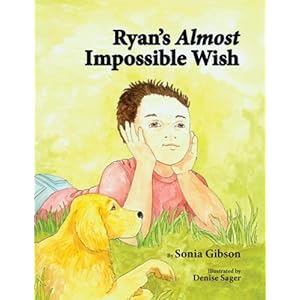
Ryan's Almost Impossible Wish

A lost puppy on the day Gramma comes to visit provides an opening for Ryan to learn about Jesus in Ryan's Almost Impossible Wish, written by Sonia Gibson and illustrated by Denise Sager.

After telling his mother he wants a big brother, Ryan's puppy, Bubby, runs away. Ryan is very upset, to the point he can't eat. When Gramma arrives, she brings hope: Bubby has been found by a neighbor, and shortly, Bubby is back home.

Gramma has brought her Book (the Bible) with her, and she and Ryan sit down to read. Using the day's adventures as a springboard, Gramma teaches Ryan that everyone is lost, like Bubby had been. Ryan states he doesn't feel lost. Gramma explains further: everyone is lost until they have Jesus as their friend. Using Proverbs 18:24, "There is a friend who sticks closer than a brother," Gramma tells Ryan Jesus is the ultimate big brother. Excited, Ryan says he wants to have Jesus as his big brother. After Gramma explains about prayer, Ryan prays for Jesus to come into his life.

What I Like: I love the fact this book uses a real-life situation kids can relate to in order to share the gift of Salvation. The message is straightforward, even if it takes a bit to get to.

At the end of the book, there's a short epilogue that helps kids apply what they've learned in the book. And, there's a quiz inside the back cover about the story.

What I Dislike: There are inconsistencies in the book's grammar. For instance, when referring to God, sometimes "Him" is capitalized, sometimes it's not.

The illustrations by Ms. Sager had a bit of a surreal quality to them. Faces weren't consistent, and there were some images where proportions were skewed. One image where Ryan is eating breakfast has Momma leaning over what appears to be a counter. Her position appears completely unnatural, as does the coloring on her face.

Overall Rating: Very Good, despite the problems noted above.

Age Appeal: 4 - 7.

Publisher Info: Amazing Grace Publishers, LLC, 2010; ISBN: 978-0-9631988-2-2; Hardback, 32 pages, $15.99

Buy it at Amazon.com for $15.99.


Bookmark and Share

Wednesday, September 16, 2009

The Great Stone Face

The Great Stone Face is a short story by Nathaniel Hawthorne retold by Gary D. Schmidt. Vivid oil-on-canvas paintings accompany rich text to spin a tale emphasizing strength of character in a gorgeous New England setting.

In New Hampshire, there is a mountain whose profile resembles a strong, noble face. Ethan, the young main character, has always been intrigued by the prophecy surrounding the mountain, which says "Someone will be born hereabouts who will look just like the Great Stone Face, and he will be the noblest person of his time." Years go by, and various men return to the village having distinguished themselves in commerce or war. Every time one of these men returns, the villagers hope he will fulfill the prophecy. However, they soon realize that riches and fame do not make one noble or good.

Ethan is particularly disappointed when the Great Stone Face has no equal, but he continues to live his life with diligence and wisdom. Schmidt says, "His life was a stream that watered wide green banks all along its course, and every soul in the town who saw him smiled." Finally, Ethan's granddaughter points out that he resembles the Great Stone Face most of all. Ethan receives her praise with humility, in keeping with his noble character.

What I Like: The oil-on-canvas paintings are beautiful. Bill Farnsworth captures New England seasons and uses light and shadow to transport us into the very setting of the story. The images of the Great Stone Face remind me of the Crazy Horse monument in Custer, South Dakota. The face (an outcropping of rock) sits high above the village, and seems to beam down on it with a strong, benevolent profile. My children loved the paintings as well, as we visit relatives near Crazy Horse every summer.

My eight-year-old was especially enamored with the plot of The Great Stone Face. She is at a good age to appreciate noble character versus more "worldly" attributes such as fame and wealth. She also enjoyed the book because the ending was a bit of a surprise.

What I Dislike: In some of the paintings it is hard to tell who Ethan is and who the rich and famous men are supposed to be. Also, the text is fairly wordy and probably wouldn't hold the attention of readers much younger than 8.

Overall Rating: Very Good

Age Appeal: 5 and up.

Publisher Info: Eerdmans Books for Young Readers, 2002; ISBN: 0-8028-5194-0; Hardcover, $16.00 (Paperback, $8.00)

Buy it Now at Christianbook.com for $5.99

Special Information: There aren't any overt mentions of God or religion, even though the story is positive and celebrates good character.


Bookmark and Share

Monday, February 11, 2013

Jesus, I Believe

Teaching the basic truths of Christianity to children can be difficult. What do you tell your child about when Christ will return? Where is Jesus? In Jesus, I Believe by Judith A. Harrah and illustrated by Julie Kukreja, the author may not have all the answers, but she does offer a foundation for what we as Christians believe in an age-appropriate, rhyming manner.

What I Like: A wide variety of topics are covered, from the sinful nature of man, to the Trinity, to Jesus returning one day.

The illustrations really emphasize what the little boy in the story is talking about. He's really cute, too, with a gap-toothed grin.

What I Dislike: I take issue with any book that talks about the Bible but doesn't back assertions up with scripture references. I really wish Ms. Harrah had included one to even five references on each page that parents could share with their children. While it's important to know what you believe, it's better to know why - and to be able to point to it in the Bible.

My second problem with the book is that it's written in a way you literally chant. It's not lyrical, even though it rhymes, and the way it repeats makes me think of people who chant incantations - for lack of a better term. For example:
"I believe in God's love
I believe in His endless love
I believe it's what He's made of
I believe in God's love"
Overall Rating: Good.

Age Appeal: 5 - 8

Publisher Info: Shade Tree Publishing, 2011; ISBN: 978-1-937331-10-8; Paperback, 34 pgs., $13.99

Buy it Now at Christianbook.com for $10.99
OR Buy it at Amazon.com for $11.89 or for Kindle for $5.99.

Special Info: Obviously, the face of Jesus is shown on the cover of the book, as well as in the interior. Images of what Heaven may be like are present, as well.


Bookmark and Share