Showing posts sorted by date for query "god I need to talk to you". Sort by relevance Show all posts

Wednesday, September 30, 2015

Project Inspired: Review and Interview

Nicole Weider is on a mission: to help young girls avoid the traps that culture sets. The trap that baits you into thinking you must sacrifice your self-worth in order to be beautiful and popular. Nicole launched Project Inspired in 2010 (www.projectinspired.com), a website for teen girls that analyzes pop culture and explores ways girls can live in their authentic beauty.

In Project Inspired, Nicole shares tips for you to stay true to yourself—to how you were created to be—as well as how to dress modestly yet fashionably, how to make a positive difference in the world, and how to enjoy your teen years while standing firm in your faith. With photographs, real behind-the-scenes stories from inside the fashion world, and an honest look at living a life that looks great on the outside and feels great on the inside, Project Inspired is a book you’ll turn to time and time again.


What I Like: From the very beginning of the book Nicole Weider, tells her testimony of being a young model in Hollywood and the pitfalls she faced in the "glamour" of being famous. So from the start she lets us know that she can actually relate to young girls trying to fit a mold, be liked by her peers and the desire to pursue a life she wanted.

I was a little weary about a book that focused on appearance but the book delves into feeling good about yourself within in a simple and easy for girls to understand. Nicole offers scripture, fashion tips, and everything a teen girl talks about with her friends and thinks about when she is alone, but with a faith filled heart. It reminds me of a teen magazine with depth and scripture.

I teach high school bible studies and a recent lesson was all about personal appearance, so I took Nicole's book into class. The girls went wild for the book and I was pleasantly surprised.

I had the pleasure of conductin an interview with author Nicole Weider and you can read it below!

What I Dislike: Nothing

Overall Rating: Very Good

Age Appeal: 12-18

Publisher Info: Zondervan; 2015; ISBN:978-0310749394; Paperback, 168 pgs., $17.99

Buy it Now at Christianbook.com for $11.49

OR Buy it at Amazon.com for $11.99.


Nicole Weider Interview 


CCBR: Hi Nicole! Congratulations on your new book, Project Inspired! I had the pleasure of reading it and was pleasantly surprised. In the beginning of the book you give us your testimony. Could you tell the moms out there a very condensed version of who you are?

Nicole: My testimony is pretty crazy to say the least! I wasn't raised in a Christian home, and I didn't have faith in my life. My family and I lived in Salem, Oregon but I always wanted to move down to LA to pursue modeling more full time. I moved when I was 16, and my agency bluntly told me no matter how thin I got, my body type wasn't made for high fashion- but it was great for lingerie and swimsuit work. I was a lingerie model for several years, and I thought it would be a glamorous experience, however it was the opposite- it was destroying my self esteem and my self worth. After a series of coincidences and bad circumstances, I fell into depression and wanted to get out of the modeling industry. Thankfully, my best friend Christina is an on-fire Christian and she was the one who encouraged me to go to church with her. She prayed for me continually, and told me how God could use my experiences for His glory. I gave my life to Jesus when I was 23, and it was the best decision I've ever made. After I became a Christian, I knew I wanted to share my testimony with people to warn them about the dangers of Hollywood and the destruction it can be, along with the hope of Jesus Christ and how He saved my life.

CCBR: I also had the opportunity to visit your website (www.ProjectInspired.com) and really liked it. Could you tell us a little about the site and how the book and site differ?

My book is different from the site because I share my best fashion secrets and skin care advice, how I knew my husband was the one, and so much more. I also answered the top questions I get from girls on everything from depression, to bullying.

CCBR: Here at CCBR we love books that are not just "clean" books but also spiritually filled. While reading Project Inspired, you talk about turning to self help books when you were in need of comfort but never really find it that way. How important was it that you include scripture and biblical principles in your book? 

Before I became a Christian, I didn't know where to turn to find hope and inspiration. I thought turning to self help books would be what I needed, when in reality nothing I could read would satisfy my soul unless I turned to God. After I made the commitment to Jesus and I saw firsthand how he transformed my life, I knew only God could save people from their doubts of self-worth. It was incredibly important to me that the book was based on Biblical principles and scriptures, along with covering all of the issues that teen girls want to know about.

CCBR: You are also a contributor for the NIV Bible For Teen Girls (Read our review HERE). Tell us how that came about.

Nicole: It was an incredible honor and privilege that Zondervan wanted to use excerpts from my new book in the teen Bible. It was completely unexpected, and it is such a blessing! I also consider it a God-incidence (what I like to call a coincidence, but not really because God orchestrates everything) that a page from my book is across from my favorite scripture which is Matthew 7:7 "ask, seek, knock." God is so loving, and He amazes me every day.

CCBR: So I know you are busy and I am sure somewhere one of our reader's kid is yelling for Mom, so I have just one more question. Why is Project Inspired good for our teen girls?

Nicole: My book is a great resource for teen girls, because I feature almost every topic that the girls ask me. My book is unique, because it's a Christian book while still encompassing things not usually talked about in the Christian genre such as what everyday wardrobe basics, how to combat acne, finding the perfect jeans, and so much more. I also weave in my personal story, along with sharing the Biblical stories and how they relate to our modern day world.

CCBR: Thank you so much for spending some time with CCBR. 


Thursday, July 2, 2015

Jacob's New Heart

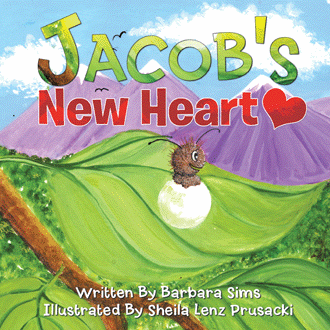
Jacob’s New Heart, written by Barbara Sims, puts the transforming power of God’s word into a visual, kid-friendly story about an ugly caterpillar changing into a beautiful butterfly.

The story begins right at Jacob’s mountainside birth. He beholds a beautiful world and then is greeted by his pretty butterfly mother. In the midst of such loveliness, Jacob is shamed by his own drabness. His mother encourages him, telling him he can be transformed from the inside out when he gets to know God.

When Jacob asks how he can do that, she replies, “If you want to get to know Him, you’ll need to ask him to come into your heart.”

After Jacob does so, he hungers. Mom tells him that God’s word will make his heart grow. Jacob eats leaves that are full of Scripture verses, such as Psalm 119:103- “How sweet are your words to my taste, sweeter than honey to my mouth.”

Once Jacob is full of God’s word, Mom guides him to make a chrysalis and rest, stating, “Now that God’s word is inside you, it will change you.” Sure enough, after some time passes, Jacob emerges a beautiful butterfly too.

Following the story, the book includes enrichment activities. (Although this section is labeled as “Suggestions For a Bible Memory Chart”, numbers 9 and 10 are not part of the memory chart directions.) Black and white drawings are included to be used as templates for creating the memory chart.

Sheila Lenz Prusacki created the watercolor-and-pen illustrations for this book. (The ugly caterpillar is actually very cute!) Most pictures are dominated by bright green and pale blue colors. Action is limited; many illustrations simply show the mother butterfly talking to the caterpillar. Several illustrations are for a two-page spread, but there are several self-contained pages as well. Although it varies, in general there is a large portion of medium-sized text on each page.


What I Like: I think the idea of putting Scripture on a leaf to show how it “feeds” us is very clever, and that once we have that inside us, it changes us. I also like how the author took advantage of her teaching background to provide some ideas for extending the story.

What I Dislike: All the verses on the leaves were related to, in effect, hiding God’s word in your heart. While that’s a GOOD thing, the message was all the same. I would have liked some verses that targeted other areas of getting to know God, such as God’s great love for people, the fruit of the spirit… or what it means to be born again.


Also, I felt like the story very quickly brushed over the idea of salvation. While this does provide a springboard for an adult reader to talk about exactly what it means to ask Jesus into our hearts, it might leave those unfamiliar with Scripture asking questions.

Finally, the paperback is expensive. If you buy this book, consider the more affordable e-book.

Overall Rating: Good.

Age Appeal: None listed-- maybe Kindergarten/1st grade crowd.

Publisher Info: Westbow Press, 2014; ISBN: 978-1490847290; Paperback, e-book, Kindle, 38 pgs., $16.95.

Buy the paperback Now at Christianbook.com for $16.95 or the e-book for $3.99
OR Buy it at Amazon.com for $15.95 or the Kindle Version for $4.99.

Friday, March 16, 2012

Jesus Teaches Us Not to Worry

Our lives are filled with worry. In Jesus Teaches Us Not to Worry by Julie Stiegemeyer, Jesus' words from the Sermon on the Mount (Matthew 6) come alive in rhyme to teach kids to depend on God when they're concerned.

The story is a basic retelling of a small portion of Jesus' famous sermon, starting with how the crowd gathered to listen to Him. After a brief overview of things covered in Matthew 5, Jesus tells the people not to worry, that God will give you all you need.
"'Do not worry,' Jesus said,
'about what you will eat.
God will give you all you need--
water, bread, and meat.'"
At the end, a modern-day family is shown reading a Bible Storybook together. The reader is urged to listen to God and remember how He cares for us.

What I Like: As with other books I've read in the Arch Book series, the stories from the Bible are told with little exaggeration and in a manner appropriate for their audience.

I love the fact that the author indicates that Jesus talked about more than just the topic of worry--it's an open invitation to read the rest of the Sermon on the Mount with your child.

The last page is a note to parents--and it's filled with great information on the story itself, as well as suggestions on how to talk to your kids if they're concerned about something.

What I Dislike: There's not much I dislike, but occasionally, the rhyming rhythm was tricky to read (even silently). This has been noted as a flaw by our other reviewers for other Arch Books, as well.

Overall Rating: Excellent.

Age Appeal: 5 - 9

Publisher Info: Concordia Publishing House, 2011; ISBN: 978-0-7586-2581-6; Paperback, 15 PGS., $2.49

Buy it Now at Christianbook.com for $1.99
OR Buy it at Amazon.com for $4.98 (6 pack).

Special Info: The face of Jesus is shown throughout the story. We've also reviewed other books by Julie Stiegemeyer, which you can find here. Additionally, reviews of other books in the Arch Book series may be found here.


Bookmark and Share

Friday, March 9, 2012

Your Special Gift

Like most parents, Carol McCormick struggled to know how to talk to her preteen girls about sex. She wanted to inform them, but also avoid being explicit. Her girls were nine and eleven at the time. What she presented to them is now available to you in book form.

Your Special Gift: A Preteen Primer to the Facts of Life is "an analogy of sex, comparing their bodies to precious gifts and opening these treasures to having sex." The author begins by talking about Christmas, how wonderful it is to open presents that morning, and how awful would it be if they had already been opened, played with and enjoyed too soon.

Each chapter begins with a short Scripture quotation, frequently from 1 Corinthians 13, then approaches the topic in a conversational style. The author defines sex as a man and woman "joining their bodies." She goes on to say: "A man's body part works like a key and a woman's body part works like a lock, and as they fit together they open this wonderful gift." While always sticking with the predominant analogy, the text includes brief discussions of:
  • various names and terms for sex
  • God's intention for sex (between a husband and wife only)
  • The importance of waiting to "open your gift" until after marriage
  • The dangers of "opening your gift" too soon or to the wrong person
  • Wrong motives for "opening a gift" and common forms of peer pressure
  • Pornography, rape, prostitution and AIDS (mostly just definitions and why they are unhealthy)
  • Bad touches and how to respond (child molestation)
All Scripture quotations are taken from the New International Version. A "Note to Parents" offers both an introduction to the book and a short explanation of why it was written.

What I Like: The author covers a broad scope of topics directly and with brevity. I like that she encourages parents to use this as a starting point for discussions with their children. I also like that she consistently reminds readers that they are valuable and that their bodies are special. While discussing predators and inappropriate touches, the author suggests to child readers that, if they have been violated and find it too hard to tell an adult, they can simply take the book and show them "this page." I think that's an excellent suggestion! Victims are usually embarrassed and scared. This provides a less intimidating way to get help.

What I Dislike: I struggle with analogies for important topics, especially sex. They seem to always fall short in one way or another, either being too descriptive or not enough. This book fluctuates in that area. For example, the author spends a whole page talking about AIDS, but never mentions the existence of other sexually transmitted diseases. The text uses words like hooker, intercourse, rape and pornography, but never once gives the accurate names for a man's "key" or the woman's "lock."

Also, in the section on predators, the author provides readers with things they can say if someone touches them inappropriately. One reads: "I'm going to tell someone if you don't stop." I find this very dangerous. Victims need to know that they ALWAYS tell, even if the violator stops.

Overall Rating: Good.

Age Appeal: 8-12

Publisher Info: Celestial Press, 2009 (print version), 2012 (e-version); ISBN: 0967536804; Paperback or Electronic; 32 pages; $5.98

Or get the Kindle edition for $0.99.

Special Info: Visit the author's website for more information on her, this book and her other titles.


Bookmark and Share

Saturday, February 11, 2012

God, I Need to Talk to You about Video Games


God, I Need to Talk to You about Video Games is part of series of books by Susan K. Leigh. Each one covers a topic that is relevant to today’s children. This one is about video games.

The boy in this story loves video games. He loves them so much he’d rather play video games than do anything else. He wants to play them all the time. His parents tell him he needs to do other things, like read books or get some exercise.

One day his mom tells him that he has played games too much. He needs to do something else and get some exercise. He tells his mom he gets his exercise by playing video games. His mom doesn’t like his attitude and grounds him from playing the games for two weeks. When the child is forced to do other things, he finds he likes playing outdoors and interacting with his friends and family without the help of an electronic device.

Bible verses are included throughout the book to illustrate the points made in the text.

The illustrations by Bill Clark are colorful and expressive and compliment the text.

What I Like: Nearly every child can relate to a story about playing video games. It’s good to have a Biblical perspective on such a modern-day subject.

Also, this is a popular series of books that are short but carry a positive message for today’s kids.
What I Dislike: There are Bible verses in the book used to illustrate various points in the story. However, some are a bit obscure or off-base in their relation to the text.

Overall Rating: Very Good.

Age Appeal: 4-8.

Publisher Info: Concordia Publishing House, 2011; ISBN: 9780758626592; Paperback, $1.19.

Buy now at ChristianBook $1.19!
Or buy at Amazon.com $2.38.NOTE: This price is for a six-book set which includes this book and five others in the series.
Special Info: Read our reviews of other books by Susan K. Leigh


Bookmark and Share

Wednesday, February 1, 2012

God, I Need to Talk to You About Healthy Eating

The boy in God, I Need to Talk to You About Healthy Eating has a problem. He likes junk food a little too much. Rather than eating his healthy lunch, he trades his apple for fruit gummies, and his turkey sandwich for potato chips. He doesn't understand why his stomach hurts after lunch, or why he is sleepy during his classes. And a note is sent home to his mother because he couldn't pay attention.

Written by Susan K. Leigh and illustrated by Bill Clark, God, I Need to Talk to You About Healthy Eating, shares how important healthy eating is and how we hurt our bodies with too much junk food, which dishonors God.

What I Like: In this age of obese kids and an attitude that junk-food-is-normal, helping kids understand healthy eating is extremely important. Having a natural cause and effect in the story helps get the point across; if you eat bad stuff, you don't feel good, and you're too sleepy to do the things you need or want to do.

What I Dislike: Some of the quoted Bible verses seem to be a very loose interpretation, which may or may not apply to the situation; with some verses, I couldn't find any application to the story. Still, I am glad the idea of healthy eating is being talked about from a biblical perspective, using verses that are relevant for teaching to respect the body God gave us. For instance, when the boy trades his food and throws away his milk, the teaching verse associated with the story is Proverbs 23:3, "Do not desire his delicacies, for they are deceptive food."

Overall Rating: Very Good.

Age Appeal: 4 - 8

Publisher Info: Concordia Publishing House, 2011; ISBN: 978-0-7586-2660-8; Paperback, 14 PGS., $1.19

Buy it Now at Christianbook.com for $1.19
OR Buy it at Amazon.com for $2.38.


Bookmark and Share

Monday, October 3, 2011

God, I Need to talk to You about Bedtime

God, I Need to Talk to You About Bedtime, written by Susan K. Leigh, is one in a series of 18 little books. Each follows a young child as he or she talks to God about a specific problem or struggle. This one is about a little girl who has difficulty falling asleep.

As she prays to God, she tells Him all the reasons she doesn't want to go to sleep, then remembers all the reasons her parents gave her for why she should. She even recounts how God rested after creation.

Three verses are quoted in sidebar fashion: Ecclesiastes 4:6, Proverbs 3:24, and Genesis 2:3.

The illustrations by Bill Clark appear to combine ink line drawings with watercolor. They're fun and touch sketchy.

What I Like: This series always offers indirect, yet effective lessons about prayer. It shows by example that kids can talk to God about anything that's on their hearts. I really like that. I also like the frequent inclusion of Scripture quotations. My kids like these because they make easy memory verses.

What I Dislike: I don't like the size of this book. It's so tiny (4-1/2" x 5-1/2"), I'm sure it will easily be lost. However, the size does make it an easy book to slip inside an overnight bag for a sleepover at Grandma's, so maybe that's not such a bad thing.

My biggest problem with this title is that it doesn't solve the bedtime problem. My son is a night owl who consistently struggles with falling asleep. He simply isn't tired when bedtime arrives. This book reiterated all the logical reasons we've given him for why he should go to sleep, but it didn't offer any suggestions for how. This frustrated both him and me.

Overall Rating: Good.

Age Appeal: 4-8

Publisher Info: Concordia Publishing House, 2011; ISBN: 0758626584; Paperback; 16 pages; $1.19

Buy it Now at Christianbook.com for $0.99!


Special Info: See our reviews of other books in this series. We've also reviewed a Christmas book by this same author.


Bookmark and Share

Friday, June 3, 2011

Noah's Ark: With Exciting Felt Characters to Act Out the Wonderful Story (A Felt Play Story)

Ducks and pigs and giraffes…oh my! Who will get on the boat first? You decide! Noah's Ark: With Exciting Felt Characters to Act Out the Wonderful Story (A Felt Play Story), written and illustrated by Cathie Shuttleworth, is an interactive board book that gives children the opportunity to reenact this favorite Old Testament story by sticking felt animal characters right on the pages. The book cover has a plastic storage pouch to hold the animals felt pieces. Each sturdy page spread features four lines of text, bright and colorful illustrations, and a large felt area for kids to decorate.

What I Like: The book is well-built with attractive, kid-friendly illustrations. The felt pieces make it irresistible to touch. As soon as I saw it, I wanted to pick it up and play with it! It provides an excellent platform to talk about Noah’s Ark.

What I Dislike: I wish the felt areas for animal placement were bigger. And while I realize the text was simplified for the baby-preschool audience, I wonder if parents will need to provide extra background. (For example, the book says, “A flood was coming and God wanted Noah and his family to be safe.” Why a flood? Why did God only save Noah?) For that reason, I was disappointed that no Scriptural reference was provided for the story.

Not a dislike but a note: Some of the felt pieces were small. They may pose a choking hazard.

Overall Rating: Good. Even so, I suspect kids who buy this book will love it as an exciting interactive novelty... and yell, "EXCELLENT!"

Age Appeal: Baby- preschool

Publisher Info: Standard Publishing, 2007; ISBN:978-0784711170; Novelty Board Book, 10 PGS., $15.99

No longer available at Christianbook.com.
OR Buy it at Amazon.com for $11.65.


Bookmark and Share


Saturday, November 6, 2010

Facing the Facts: The Truth about Sex and You

Finding a suitable sex ed book for kids is difficult. But finding an accurate sex ed book upholding biblical values? That's almost impossible. Fortunately for Christian parents, Stan and Brenna Jones offer a whole series of sex ed books that have won the Christian Book Award. Book 4 in their series, targeted to young teens, is called Facing the Facts: The Truth About Sex and You.

The book begins by answering the questions "Why and How did God make men and women different?" Here you'll find scientifically based descriptions of how a boy or girl's body changes at puberty. There are textbook-like line drawings of the organs (male and female, including breasts), and complete coverage of all the basics, from getting a period to experiencing wet dreams. Another chapter deals with how women become pregnant, a little bit about the gestation of a baby, and the basic facts about birth. Although all this basic information can be found in any mainstream sex ed book, the authors of Facing the Facts make their book different by explaining Gods design in all these facts.

Next, the authors cover the topic of abstinence before marriage. They write that abstinence is the only way to absolutely not catch sexually transmitted diseases, and that it's also the way to "show God you love Him by obeying Him." In addition, they write, remaining abstinent before marriage gives the greatest honor and respect for the "purpose and meaning" of sex. The authors list some lies kids might hear about why abstinence is bad - or even not do-able - along with reasons why those myths aren't true.

Dating is covered pretty extensively, and the authors urge kids to decide long before they ever date just "how far" they are willing to go. This way, they say, kid are less likely to make a mistake in "the heat of the moment." This chapter also advises kids to only date Christians (so they won't be "unequally yoked," 2 Cor. 6:14) and what the true test of love is (time). The authors suggest kids younger than 16 date only in a group setting. Petting or touching is also discussed in detail. The authors conclude that while the Bible doesn't expressly talk about petting (giving historical reasons why this is so), Jesus says anyone who even looks lustfully at a woman he's not married to is committing a great sin. (Matt. 5:28) Petting creates or feeds lust, the authors say, and therefore should be avoided by Christians. In addition, they write, petting can lead to sexual intercourse with people hardly realizing what's happening.

Next the authors cover tough issues like peer pressure, pornography (sinful because it feeds lust, among other things), cybersex and cyberdating (dangerous), cohabitation before marriage (sinful and statistically harmful to a future marriage), masterbation, broken families, homosexuality, and handling a public school education sex ed class that is "discouraging" to Christian students.

The final chapter encourages kids to walk with God and obey him in all things - including their sexuality.

What I Like: This book is solidly biblical and easy to read. The authors are not judgmental, but neither are they afraid to write about what the Bible has to say on controversial subjects like homosexuality (the author concludes it's a sin, according to the Bible, and studies show genetics play a very minor role in it) and masturbation (which isn't forbidden in the Bible, but if it makes you lust after the opposite sex, they authors write, it's a sin). In addition, the authors don't boss kids around. Instead, they make suggestions about what kids might choose to do.
What I Dislike: This isn't really a "dislike," but more of a caution to parents. Read this (or any other sex ed book) before giving it to your kids, then carefully and prayfully decide if it's right for their personal level of maturity. My kids are 5 and under, so it's hard for me to imagine they'll be ready to learn, at age 11, that sex feels good and what oral sex is. But maybe they will be. In today's world, it's difficult to shield kids from sex and I very much want to be at least one of the first people they learn about such things from. ("Why does this book discuss oral sex?" you wonder? Because the authors know many kids are experimenting with it in order to avoid unwanted pregnancy. Unfortunately, as the authors point out, even oral sex has it's problems.)

In addition, it would have been so very helpful if the authors had included a list of biblical references about sex. For example, a list of verses or sections about homosexuality would greatly back up their assertions that the Bible says it's a sin.
Overall Rating: Excellent.

Age Appeal: The publisher's suggested age range is 11 to 14, but every kid is different and not all will be mature enough at 11 to read this book. On the other hand, I think parents need to carefully consider whether or not their kids will be exposed to this information - presented in a secular way - at school, among friends, and from media - at that age.

Publishing Info: NavPress, 2007; ISBN: 978-1600060151; paperback, 128 pgs., $11.99

Buy now at Amazon.com for $8.63

OR buy at ChristianBook.com for $9.99


Special Info: Check out our other reviews of other sex ed books in this series.


Bookmark and Share

Monday, June 28, 2010

Case for Faith for Kids

The Case for Faith for Kids by Lee Strobel, is an excellent introduction to Christian apologetics for kids. Filled with kid-friendly analogies, expert testimonies, and factual information, The Case for Faith for Kids shows kids how to live out 1 Peter 3:15, "Always be prepared to give an answer to everyone who asks you to give a reason for the hope that you have. But do this with gentleness and respect."

Strobel begins by helping kids understand "five reasons God makes sense even with science." He explains how God makes sense out of creation, the fine details of life (biology), right and wrong (a moral code), Jesus, and our personal experience.

In Chapter Four, Strobel relays an excellent discussion with Ravi Zacharias about why all religions are not equal. After explaining why Christianity is true, Zacharias counsels readers, "When speaking of matters that are important to people, such as belief in God, we need to be gentle and understanding. . . It's important to tell the truth--we just should do it gently. We need to show people we really do care about them. We need to build strong friendships so that we'll have the chance to sit down and talk over these life-changing ideas with them."

Chapter Five assures readers they can have doubts and still be a Christian. In fact, Strobel tells kids questioning faith and searching for answers can build up faith, just like exercise builds stronger muscles. He also illustrates the clear distinction between faith (defined as a commitment to trust) and feelings, (ideas based on emotion).

In his Epilogue, Strobel explains how to establish a relationship with Christ, and challenges readers to learn more about God, seek to please Him, and invite friends to join in their journey of faith.

The book has cartoon illustrations, questions to think about, and boxes highlighting important Scriptures or ideas throughout, as well as blank pages for your own "Case Notes."

What I Like: Everything! This book is perfect for young people whether they are Christian or not. Non-Christians won't feel patronized or preached to, and Christians will gain solid foundations for their faith. Christians, especially, will learn how to talk about their faith in compelling, yet respectful ways.

The tone is intelligent, but also fun and conversational. Faith is presented in easy-to-grasp, engaging terms.

What I Dislike: Nothing

Overall Rating: Excellent!

Age Appeal: 8-12, but I even found it extremely helpful and practical.

Publisher Info: Zonderkidz, 2006; ISBN: 978-0-310-71146-9 ; Paperback, $7.99

Buy it Now at Christianbook.com for $5.99

OR Buy it at Amazon.com for $7.99.

Special Info: Check out our review of The Case for Christ for Kids here. Look for our upcoming review of The Case for a Creator next month.


Bookmark and Share

Thursday, May 27, 2010

The Bed and Bisket Gang: Everybody's Different


In The Bed and Bisket Gang: Everybody’s Different, written and illustrated by M. Rene DePaulis, Sarah is a young girl whose family has just moved to a farm, a farm they call The Bed & Bisket. Sarah starts out with only two dogs that she takes with her, but by the end of the book she has taken in a menagerie of creatures to care for.

Each animal that Sarah takes in has special needs or is “different” in some way: There’s Chloe, an abused, abandoned dog that Sarah finds under a bush; Black Lamb, a sheep that is hard-of-hearing; Mother Utter, a cow whose milk has dried up; and Ahw-ee, a donkey who walks backwards, among others. All of the animals can talk. Except for the last chapter, each one is in essence a short story of how each animal (or group of animals) came into Sarah’s life and what she did to help them.

Small, pencil-sketch illustrations are included at the beginnings of most of the chapters that provide a visual representation of the subject matter of those chapters.

A Bible verse from Matthew 25:40 is given as a reference for the story: “The King will reply, ‘I tell you the truth, what ever you did for one of the least of these brothers of mine, you did for me.’”

An epilogue is included at the end of the book the talks about different types of disabilities. Also, a code is provided in the book that can be used to download an audio copy of the text.

What I Like: This is a story about being different and how we all need God’s love. The book’s message is: “Jesus is on the inside working on the outside. Everybody’s different. God loves all of us and uses all of us.”

What I Dislike: Although the idea for the story is a good one, the writing is weak. The author uses vocabulary and sentence structures that are not kid-friendly.

Overall Rating: Good.

Age Appeal: 9-12.

Publisher Info: Tate Publishing, 2009; ISBN: 9781606966686; Paperback, $8.99.

Buy now at Amazon.com $8.99!


Bookmark and Share

Saturday, May 22, 2010

The Magic Tree House Series

UPDATE 4/6/11: There is now a series of books based on the Magic Tree House books, but with a definite Christian slant. Click here to read our reviews of the books in the Imagination Station series.

Almost every school library - and many church libraries - carry Mary Pope Osborne's massively successful Magic Tree House books. As of 2008, the series had sold over 2 million copies. Ideal as a read-t0-me books for preschoolers and early grade school kids, or as illustrated first chapter books for newer readers of about 7 or 8, the books are easy to read, packed with adventure and action, and teach history and natural science in a fun way. There are even go-with, nonfiction research guides to accompany many of the books.

But despite the many positive things about the ever-growing Magic Tree House series, some Christian parents and teachers wonder whether they are appropriate for their kids. To help you determine whether the series is right for your child, school, or church, we (Erin and Kristina) compiled a list of every book currently in the series, along with possible items that might concern some parents.

In no way do we intend to tell you whether or not your kids should read the Magic Tree House books. We both feel reasonable Christian parents may choose to allow their children to read the entire series, part of the series (omitting certain titles that bother you as a parent), or none of the series. It's all a matter of what you are comfortable with.

Instead, we hope this compilation will help you determine which, if any, of the books you think are suitable for your children, saving you from reading them all. (Although they are short, quick books, and we encourage you to read at least one or two to discover for yourself how you feel about them.)

While our list mostly features things in the series we think some parents might not like, please remember each book has its positive features, too. These are fun, educational books that really "hook" many kids into reading. In addition, any features Christians might find particularly positive are underlined.

GENERAL NOTES

*
In the Prefaces (written for those who've not read the other books in the series) of books #4 - 28, Morgan le Fay is mentioned as an "enchantress" and/or a "magical librarian."

* From book #4 onward, those familiar with the original Camelot story may be disturbed to find Morgan le Fay portrayed so positively. Historically, she's an evil character, but in Osborne's books she is benevolent.

* The "Merlin Missions" books (book #29 onward) target a slightly older audience than the original Magic Tree House books. These books are longer and have more complex sentence structures. The overall educational element in many of them isn't as strong, but the magic element is stronger than in books #1 - 28. In the Merlin Missions books, Jack and Annie, the main characters in the books, often rely on magical solutions instead of their own creativity and resourcefulness.

POTENTIAL CONCERNS

#1 Dinosaurs Before Dark: Old earth theory is mentioned when the author states dinosaurs "vanished 60 million years ago." Protagonist Annie says a "magic person" created the "magic tree house."

#2 The Knight at Dawn: Jack says of Annie (his little sister), "I'm going to kill her." In the days of knights, Annie holds up a flashlight and says: "My magic wand! Get down or I'll wipe you out!"

#3 Mummies in the Morning: A prominent character is a ghost needing The Book of the Dead to move on to her next life. A cat leads the kids out of pyramid; Annie says it does this by "magic."

#4 Pirates Past Noon: Refers to parrot as "a magic creature." The bird later turns into Morgan Le Fay. Jack says he's read she's a "witch." She tells him not to believe everything he reads and that she's an "enchantress." She says she put a "spell" on the tree house and that she's turned into animals in all the previous stories in order to help them in their adventures.

#5 Night of the Ninjas: Morgan announces she's under a "spell."

#6 Afternoon on the Amazon: The kids try to free Morgan from a "spell." Annie lists things they've found to break the spell: "Moonstone...Mango..." The author concludes: "It sounded like a spell."

#7 Sunset of the Sabertooth: Morgan is under a "spell." Old earth theory is mentioned. A book the kids read says cave men might "have been led by a sorcerer or 'Master of the Animals.'"

#8 Midnight on the Moon: Mentions the spell over Morgan and the kids say "moonstone, mango, mammoth bone, mouse" over and over until the spell is broken. Merlin is called "the greatest magician who ever lived."

#9 Dolphins at Daybreak: Morgan's magic lets the answer to a riddle appear on a scroll.

#10 Ghost Town at Sundown: Morgan's magic lets the answer to a riddle appear on a scroll. Mentions a "real" ghost met in ancient Egypt and prominently features a cowboy ghost.

#11 Lions at Lunchtime: We found no potentially problematic sections in this book.

#12 Polar Bears Past Bedtime: Morgan sends a dream to an Eskimo so he will help the kids. The Eskimo later says "we always thank the animal spirits." He talks of a ceremony "to honor the spirit of the polar bear." When Jack and Annie copy a polar bear's actions to save their lives, they thank the bear spirit, bowing to the bear, then dancing for him. The author says the Northern lights appear "like a genie coming out of a magic lamp." The kids wonder if the lights are the bear's spirit.

#13 Vacation Under the Volcano: An old woman "soothsayer" can "see into the future." The kids run across a temple built for Jupiter where the author says people "worshiped many gods and goddesses. Today we call these 'myths.'" When it looks like the kids will die in Pompeii, Annie lifts a scroll to the sky and says "Save us, story!" Hercules appears and saves them. Later, Jack looks to the sky and tells Hercules thanks.

#14 Day of the Dragon King: The kids go to ancient China where evil spirits are readily acknowledged. The roofs are curved to ward off spirits who can only travel in straight lines. The kids hide in a burial ground because the guards are afraid of the spirits there. Dragons are said to be brave and powerful. Morgan tells the kids: "In your darkest hour, only the legend will save you." The legend tells of a magical ball of silk, which later shows Jack and Annie the way out of a tomb maze.

#15 Viking Ships at Sunrise: Jack holds up a scroll and says, "Save us, story!" A sea serpent appears and saves them. This book also offers lots of positive info about monks. The author says: "Christian monks in Europe - especially in Ireland - made decorated, or 'illuminated' manuscripts...Scholars today praise the brave Irish monks who helped keep Western civilization alive." In the notes after the story, we learn St. Patrick converted Ireland to Christianity and that monks "made beautiful manuscripts to reflect the glory of God."In the notes after the story, we learn St. Patrick converted Ireland to Christianity and that monks "made beautiful manuscripts to reflect the glory of God."

#16 Hour of the Olympics: One character says the "olive tree is our sacred tree which is why Olympic winners wore a crown of olive leaves." Nike, the goddess of victory, is mentioned. "Most important Olympic god" is said to be Zeus. The kids visit his temple. The athletes, we're told, went to temple and swore to Zeus they'd trained well and would obey rules of the games. Plato is a central character in this book and is called "one of the greatest thinkers who ever lived."

#17 Tonight on the Titanic: Features a dog that's "under a spell." Annie says of the dog: "I think he has a touch of magic." The kids are described as "good luck," similar to a good luck charm. The author references "legend," saying musicians played until the ship went down and their last song was "Nearer My God to Thee."

#18 Buffalo Before Breakfast: A dog is under a spell. A lady in white appears and disappears, saving the kids from Bison stampede. She's described as a "spirit" or "ghost" and a "messenger of the Great Spirit." Smoking a pipe to join with "the Great Spirit" is mentioned and the Great Spirit is called "the source of all things." One character says: "There are many [spirits]...wind spirits, tree spirits, bird spirits...Sometimes they can be seen. Sometimes not." Praying to the Great Spirit is also mentioned. Annie says: "The Great Spirit won't ever vanish...It will always take care of Black Hawk's people." After the story, information on the legend of the woman in white is given. In the notes after the story, the author states "the U.S. Army was at war with the Native Americans of the plains. They knew the Native American way of life could not survive without bison. So they decided to kill all the herds." However, killing bison was never official policy of the Army - although it's true some Army officers felt it better to kill the bison than to have the Indians survive on them, others went out of their way to ensure the safety of bison.

#19 Tigers at Twilight: A dog is "under a spell." The kids wonder how a blind man could know so much that seems to require vision; Annie says: "The one great voice of the forest told him." Notes at the back of book talk about Hinduism and one of its goddesses.

#20 Dingoes at Dinnertime: The dog is still "under a spell." The kids find a glowing cave painting of a snake and two human hands. When rain comes and ends a wildfire shortly afterward, Annie says it was "magic...The glowing hands and the snake...somehow they brought the storm." Later, they receive piece of bark as a gift - it has the same painting. They learn the Aborigines' "Rainbow Serpent" sends rain. The "magic snake" supposedly also created the world and ceremonies for it are mentioned. Morgan says "there is mystery, magic, and wisdom in the traditions of ancient peoples." Spells and Morgan's spell book are mentioned. An Aborigine legend of the creation of Australia is presented in the notes after story.

#21 Civil War on Sunday: Annie calls a flash in the woods "magic." (Jack calls it lightening.)

#22 Revolutionary War on Wednesday: Prologue mentions spells.

#23 Twister on Tuesday: Prologue mentions spells.

#24 Earthquake in the Early Morning: Prologue mentions spells. King Arthur asks if the kids are magic. They say they are not, but that Morgan is.

#25 Stage Fright on a Summer Night: Prologue mentions spells. Morgan tells the kids they are "going to learn magic." Annie asked if they are going to become magicians: "Will you teach us charms and spells?" Morgan says: "There is a magic that does not need charms or spells...You'll find a special magic on each of your next adventures...To find a special magic,/You must step into the light/And without wand, spell, or charm,/Turn daytime into night." In this case, she is speaking of the magic of the theatre. Annie steals a bear, wanting to save him from a bear fight. Later, Shakespeare pays for the bear.

#26 Good Morning Gorillas: Jack and Annie use "the magic of sign language" to communicate with wild gorillas.

#27 Thanksgiving on Thursday: Jack and Annie discover the "magic of community" and Squanto tells them to "be kind to those who feel different and afraid." Osborne explains, "[some pilgrims] wanted freedom to worship God in their own way...not the way the king of England made them." There is no mention of Christianity, specifically, and Osborne notes other pilgrims just wanted a chance at a new life.

#28 High Tide in Hawaii: Prologue says Jack and Annie will "learn the art of magic." (The magic of friendship, as it turns out). Hawaii is said to have "formed millions of years ago." A native is said to chant to a volcano goddess. (In the notes after story, we learn a bit more about the goddess.) The kids are declared "Magicians of Everyday Magic" because they've learned about the magic of theatre, animals, community, and friendship. They've "learned to find the magic in thing you encounter on earth every day."

#29 Christmas in Camelot: No mention is made of the Jesus or Christian traditions. Instead, Mordred's Dark Wizard places a spell over Camelot, robbing it of joy. The Christmas Knight asks the kids to go to the Otherworld, "an ancient, enchanted land beyond the edge of the earth....where magic first began."

#30 Haunted Castle on Hallow's Eve: The letter from author mentions "Merlin the magician." Annie contemplates being a vampire for Halloween and Jack is about to dress up as a ghoul. The kids are called "Magicians of Everyday Magic." A castle haunted by invisible ghosts and a magic diamond are central to the story. Jack and Annie visit the castle with Teddy, a "young sorcerer" whose parents were an enchanter and a "wood sprite from the Otherworld." Their friend Teddy uses a hazel twig and rhymes to cast a spell. The kids also use twig to turn the Raven King (half raven and half man, due to a misspoken spell) entirely into a raven. Jack lies to the Raven King to try to save Teddy and Teddy lies to Merlin about having a magic twig. In notes after story, author talks of "sacred stones."

#31 Summer of the Sea Serpent: Takes place on Summer Solstice. Jack and Annie meet Kathleen, a "selkie" (a girl who can change into a seal). She uses "magic" rhymes to change them into seals and back into children. Fog is referred to as the "Cloak of the Gray Ghost."

#32 Winter of the Ice Wizard: Takes place on Winter Solstice. A scene where the Ice Wizard replaces his eye is a bit gruesome. He traded his eye to the sisters of fate (also known as the Fates in Greek myth, or the Norns in Norse myth). The Fates are described as witches, "skinny as skeletons, with straggly hair, long noses, huge, bulging eyes, and . . .crooked, bony fingers." The kids use a wind string to control the wind, and the Ice Wizard uses Merlin's staff to change two wolves back into Merlin and Morgan.

#33 Carnival by Candlelight: This book begins with a quote from a Lord Byron poem mentioning the "stroke of the enchanter's wand." Morgan thinks Jack and Annie may be ready "to use magic on your own," but Merlin is cautious about "sharing magical powers with mortals." Teddy and Kathleen make the kids a book of magic spells to use. They also use magic rings to move in and out of time and space. At the Carnival in Venice, Jack and Annie run into a tall woman - who turns out to be a man in costume. Some Roman mythology mentioned, including the gods Mars and Neptune; one person they meet seems to treat Neptune like a real god, not a myth, and the kids bring Neptune to life by imagining him. Annie reads a spell to get them out of a dungeon: "Iron or copper, brass or steel, Bree-on-saw! Bro-on-beel!" Later, they say a similar rhyme to bring a winged lion statue to life.

#34 Season of the Sandstorms: The kids use a spell book with nonsensical rhymes three times - once to find helpers, once to take a flying carpet ride (a la Arabian Nights), and once to repair a book. Annie lies extensively about where the kids are from. When the kids hear a strange whistling sound in the dessert, the ruler of Baghdad tells them: "Some say it is magic...But I believe that all things in have their reasons..." Annie is disappointed it's not magic. Aristotle is called "one of the greatest philosophers of all time" and the kids work hard to protect his "wise" writings for the world.

#35 Night of the New Magicians: The kids must find the secret of success of four well-known "magicians" before an evil sorcerer (Merlin in disguise) does. The "magicians" are Thomas Edison, the "magician of light," Gustave Eiffel, the "magician of iron," Louis Pasteur, the "magician of the invisible," and Alexander Graham Bell, the "magician of sound." The kids pass a model of a Buddhist temple and a model of a Muslim mosque. Jack and Annie use two spells: One to make their bicycle spin into the air ("Whirl and twirl and swirl and spin/tee-roll-eye-bee-eye-ben"); a similar spell makes Merlin disappear to his own time.

#36 Blizzard of the Blue Moon: Jack and Annie are given a book of spells as they try to find the unicorn Dianthus, who is a source of magic in the Underworld. She is in a 15th century tapestry hanging in the Cloisters. The kids use three spells in this book, using nonsense words. Jack and Annie are given a magic wand shaped like Dianthus' horn.

#37 Dragon of the Red Dawn: Teddy and Kathleen, young "enchanters," have magic blue rings to transport them from place to place. When Tokyo goes up in flames, the kids use the magic wand of Dianthus to summon the Cloud Dragon to make rain fall and put the fire out.

#38 Monday with a Mad Genius: Leonardo da Vinci mentions his theory that fossils were created by the earth being flooded "eons ago." Annie uses the wand of Dianthus to "make us fly like birds." Later, da Vinci tells Annie he could never fly before because he was missing the "spirit" of the bird. Da Vinci tells kids the secret to happiness is curiosity.

#39 Dark Day in the Deep Sea: Morgan believes "four is the magic number that will ensure success." The kids use the wand of Dianthus to make some scientists experimenting on animals "hear the truth." After using the wand, the sailors hear an octopus say, "Let me go home. I'm no monster." The secret of happiness is to "conquer fears by having compassion for all living creatures."

#40 Eve of the Emperor Penguin: Jack and Annie use the wand of Dianthus to find the fourth secret of happiness. Jack asks the wand to "save Merlin, Annie and me." Old Earth theory is used to explain the development of Antarctica as a continent. Annie and Jack lie about their reasons for being on an expedition for adults. The secret of happiness is to care for others who need you.

#41 Moonlight on the Magic Flute: Enchanters Teddy and Kathleen give Jack and Annie a magic flute. It can save them from danger and whatever they sing while it is playing will come true. They use it to save Wolfgang Amadeus Mozart from a leopard and lead the rest of the zoo animals back to their cages. Annie calls Jack a "dummy," but later apologizes.

#42 A Good Night for Ghosts takes place on the Eve of All Saints day (Halloween). Jack's research book says the Eve of All Saints is a good night for ghost sightings. Jack and Annie take shelter, with Louis Armstrong, in a haunted blacksmith shop in segregated New Orleans. The ghosts of ten pirates haunt them, but Annie plays a magic trumpet and Jack sings, and the ghosts leave.

#43 Leprechaun in Late Winter: Jack and Annie use a magic Irish whistle and a meet with a leprechaun. The magic whistle transports a central character to the Shee (Irish for faeries) in an enchanted forest. They see many animals who are said to be people under spells. The faerie queen tells of the faerie's origins, as the tribe of the Tuatha de Danaan.

#44 A Ghost Tale for Christmas Time: Jack and Annie help a discouraged Charles Dickens find inspiration to write A Christmas Carol. When Jack plays a magical violin, three ghosts appear out of the mist and remind Dickens of his childhood. These ghosts make Dickens see the value of writing and form the basis for the ghosts of Christmas Past, Present and Yet to Come in A Christmas Carol.

#45 A Crazy Day with Cobras: Teddy, a young enchanter from Camelot, has accidentally turned Merlin's prized penguin into stone. He asks Jack and Annie to help him recover four objects to reverse the spell. To find the first item, they travel to India, to see the Great Mogul who built the Taj Mahal. While there, they drink a potion to become smaller, in order to escape a king cobra and find their lost emerald rose.

# 46 Dogs in the Dead of the Night: Jack and Annie must find a flower in Switzerland, to help break the spell that has turned Merlin's penguin to stone. While in the Alps, they are rescued from an avalanche by Saint Bernard dogs from a monastery. Later, the children drink a potion, and become St. Bernard dogs for an hour. Nothing specifically Christian is mentioned about the monastery, but Jack learns to balance worry and responsibility.

#47 Abe Lincoln at Last: Jack and Annie are still trying to rescue Merlin's pet penguin. In order to break the spell, they must help Abe Lincoln as a young boy, and later encourage him on the eve of the Civil War. Jack and Annie are told they must "trust the magic" when they drink a potion. They also learn that sometimes sad things happen, but they will eventually make sense--if not in this world, "maybe in a world beyond this world."



Bookmark   and           Share